Depression Screening: Valence/Arousal from EEG & GSR via Unsupervised Representation Learning
Mentors Kobi Osei-Mensah, Science Faculty, The Loomis Chaffee School & Dr. Peter Na, Assistant Professor of Psychiatry, Yale University
After watching peers in both Korea and the U.S. struggle to answer school-wide mental health questionnaires honestly, I began wondering what gets missed when our measurements depend on someone being able to put their emotions into words. I started by surveying students about their experiences with self-report screening, then explored whether physiological signals could offer another window into what they were feeling. Working with Mr. Kobi Osei-Mensah and Dr. Peter Na, I combined EEG and galvanic skin response signals with unsupervised representation learning to predict emotional valence and arousal, physiological dimensions closely tied to affect. This approach reduced prediction error compared with the baseline model, exploring a path toward depression screening that does not depend solely on questionnaires or self-report. Computation and physiology met to make invisible dimensions of mental health more measurable. It made me interested not only in what data can reveal about people, but in what our usual ways of collecting it leave unseen.
*JSR is under maintenance; link is to full paper
Highlights
- Published in Journal of Student Research, Aug 2025
- Presented at National Alliance on Mental Illness Connecticut (NAMI CT) ’25 ↗ with Cha Lab
- Presented at the Loomis Chaffee Science Symposium, May 2025
Abstract
Background
Globally, 280 million are suffering from depressive disorders, one of the most common mental disorders referring to long periods of depressed mood that affect life negatively, often leading to suicide. Adolescents are especially vulnerable, with 35% of youth aged 12 to 17 in the United States having major or severe depression. The rate of depression in teenagers has doubled over the past decade, along with the youth suicide rate.
Currently, self-report questionnaires such as the Patient Health Questionnaire are utilized to diagnose depression. Self-report questionnaires may be accurate for other population groups that are fully aware of the state of their mental health, and are willing to seek support. However, adolescents do not have the same ability to recognize their symptoms nor answer honestly in school-wide screening tests.
Methods
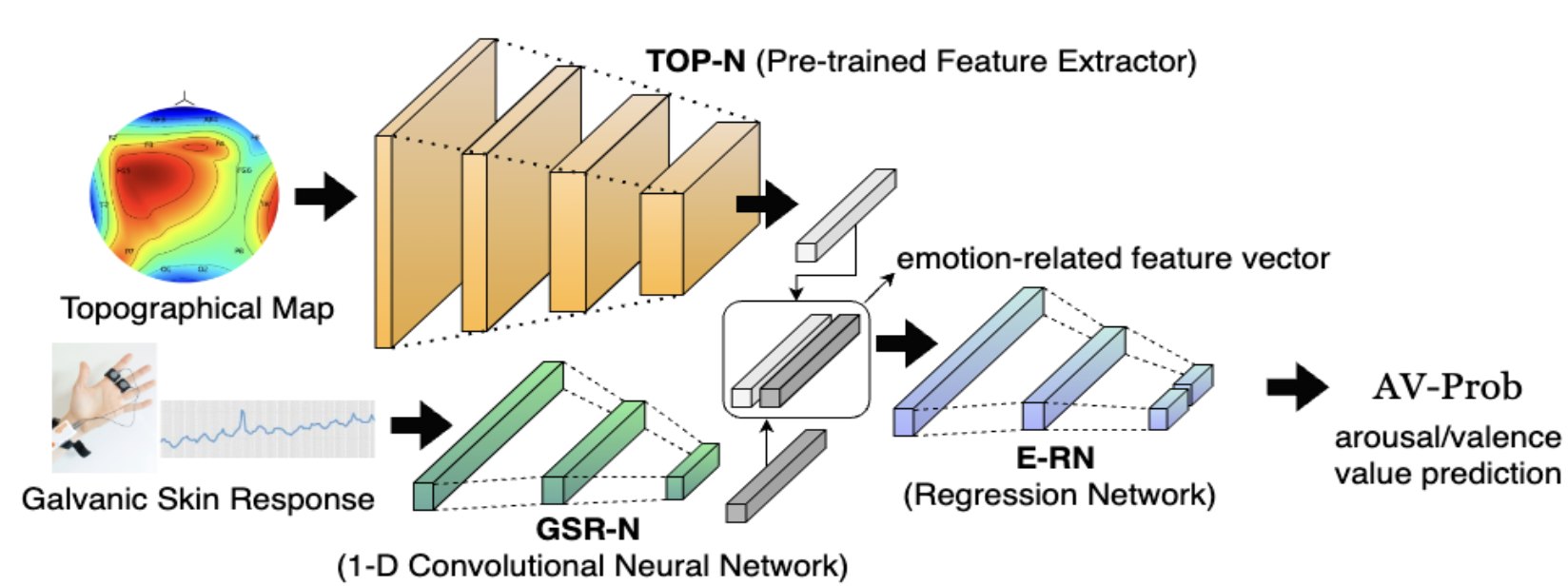
In order to solve the aforementioned problem, a method that captures the true emotion without self-reports based on electroencephalogram (EEG) and galvanic skin response (GSR) is proposed. The novel system is composed of representation and transfer learning steps for the extraction of emotion-related features from EEG signals, and a 1D convolutional neural network for extraction in GSR signals. The extracted features are merged and outputted as points on the arousal-valence graph, where emotions can be detected.
Results
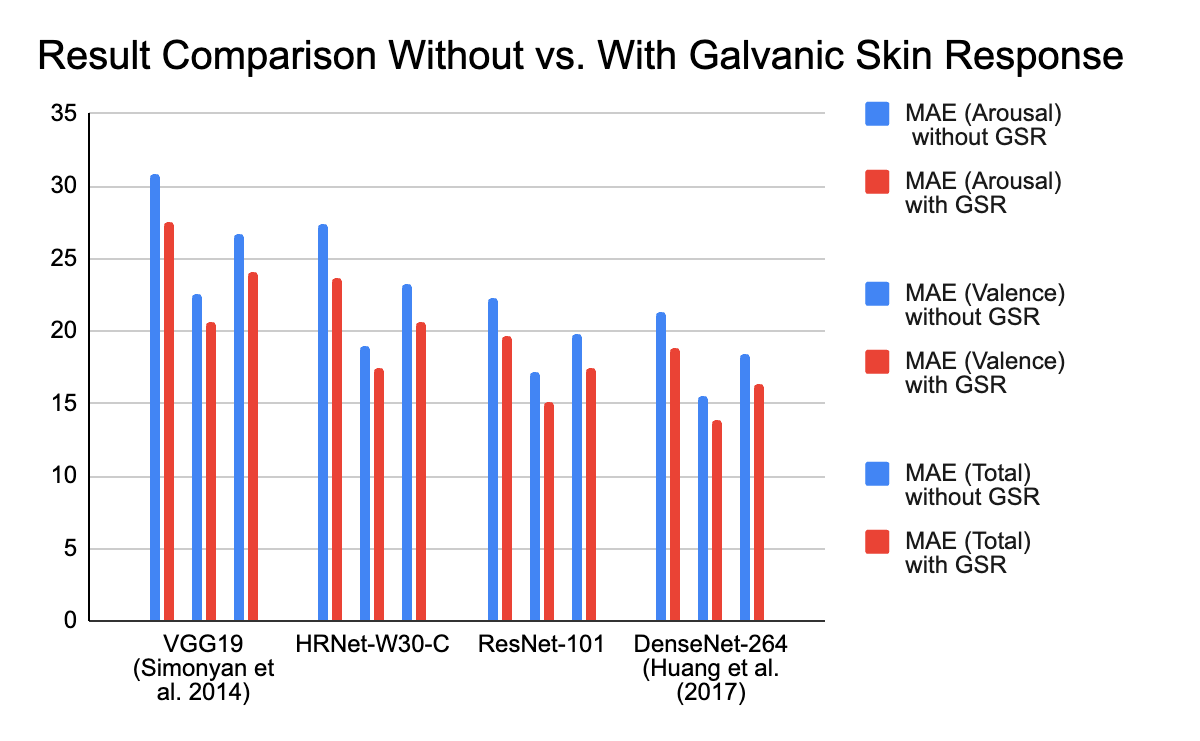
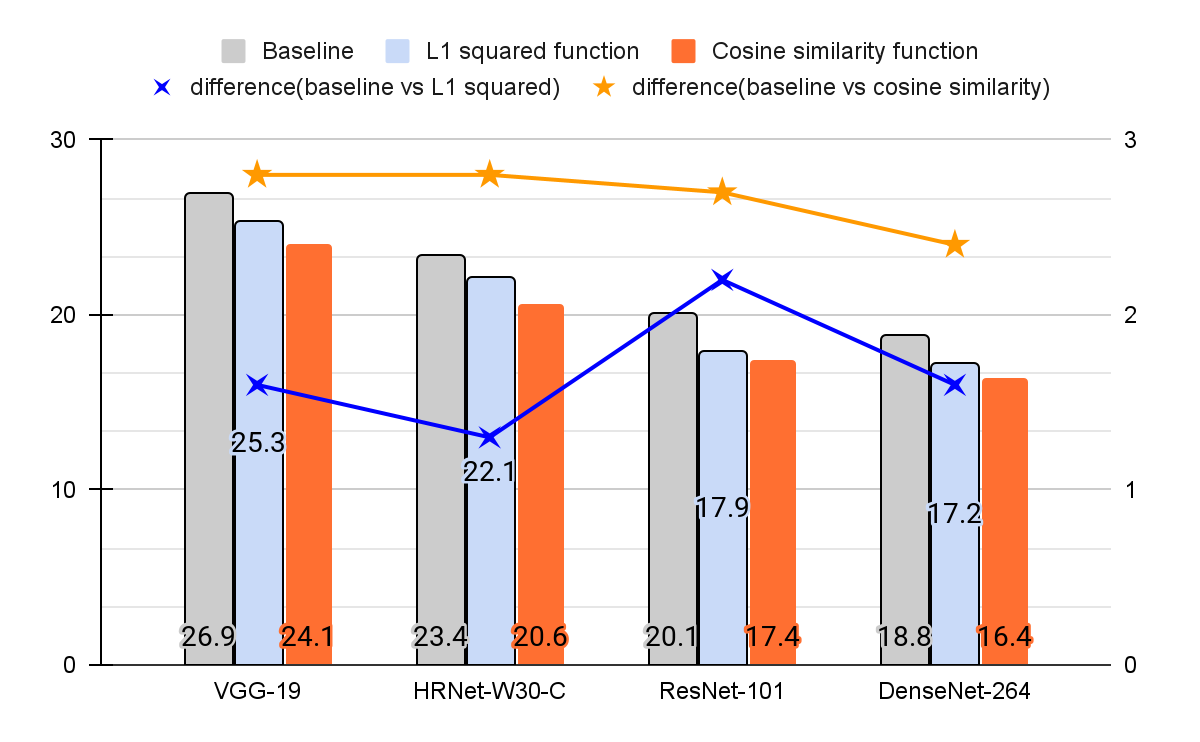
Through extensive experiments, the proposed model demonstrated exceptional performance. The best MAE was 18.4 when without GSR, 18.8 when without representation learning, and 17.2 when without the proposed equation, but improved to 16.4 in the proposed model.